
Western Glacier Stonefly
Latin name: Zapada Glacier,Conservsation status: vulnerable (population is decreasing)
One of 3,500 species of Stoneflies, this rare insect breeds in only a few cold water streams immediately below melting glaciers or next to permanent snowfields in Glacier National Park, USA.
Since 1960, the average summer temperature in Glacier National Park has increased by around 1 °C and glaciers have declined by 35%. By counting Stoneflies, scientists can determine how quickly glaciers are melting and the temperature of streams. In a two year search begun in 2011, scientists found the Stonefly in only one of the six streams it had previously occupied and discovered that it had retreated to two different streams at higher altitudes. Satellite data confirm that the world’s glaciers are declining, affecting the availability of fresh water for humans, animals and plants, and contributing to sea level rise.
Other animals at risk
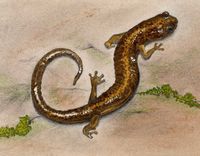
The Shenandoah Salamander lives in an isolated, high altitude region of Shenandoah National Park, USA. Like all amphibians who have thin, permeable skin, salamanders are very sensitive to environmental changes. If average temperatures or moisture increase, this salamander, restricted to its cool micro-climate, will be at risk—having no place to go but to lower, even warmer, altitudes. If warming causes other species of lower altitude salamanders to migrate higher, they will compete for the Shenandoah's cool, moist habitats.
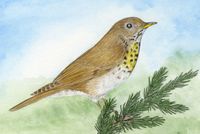
The breeding habitat of Bicknell's Thrush is primarily restricted to mountain spruce forests of Northeastern US and Canada. They winter in the Caribbean and spring migration north is cued by day length. If spring arrives early in the north and the Thrushes arrive at their normal time, the abundance of food—insects and fruit—would already have peaked. Warming temperatures also produce an abundance of spruce and fir cones—feeding and increasing the population of Red Squirrels, a main predator of eggs and chicks. Storms and hurricanes threaten the Thrush's tropical winter habitat. Pollution, logging and deforestation threaten their spring breeding and winter habitats.
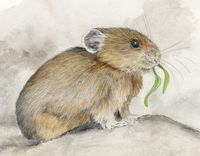
Pikas live primarily in cool micro-climates on rocky slopes, feeding in adjacent meadows. Warmer temperatures and reduced snowpack are the main threats. Some Pikas may move to higher, cooler regions if there is enough vegetation. Pikas living in lower, warmer regions are at risk if they attempt to move to other regions as they are extremely sensitive to heat—more than two hours in temperatures over 78 °F can be lethal. Without enough winter snow for insulation, Pikas will freeze.
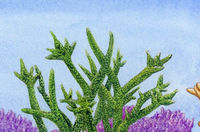
In the last 30 years the Staghorn Coral population has decreased by 80% from disease, pollution, development and damage. Climate change is increasing the risk of extinction. Corals live in symbiotic (mutually beneficial) relation with algae. The coral receives nutrients and oxygen from algae, and the algae receive nutrients and carbon dioxide from the coral. Rising sea temperature increases algae growth so oxygen levels become too high for the coral, causing "bleaching"—the coral expels the algae and dies. Higher ocean acidity contributes to bleaching and also reduces the ability of corals and other marine animals to build hard shells. Other threats from climate change are sea level rise, changes in currents and storm damage.
The Western Glacier Stonefly is at risk from climate change because of: