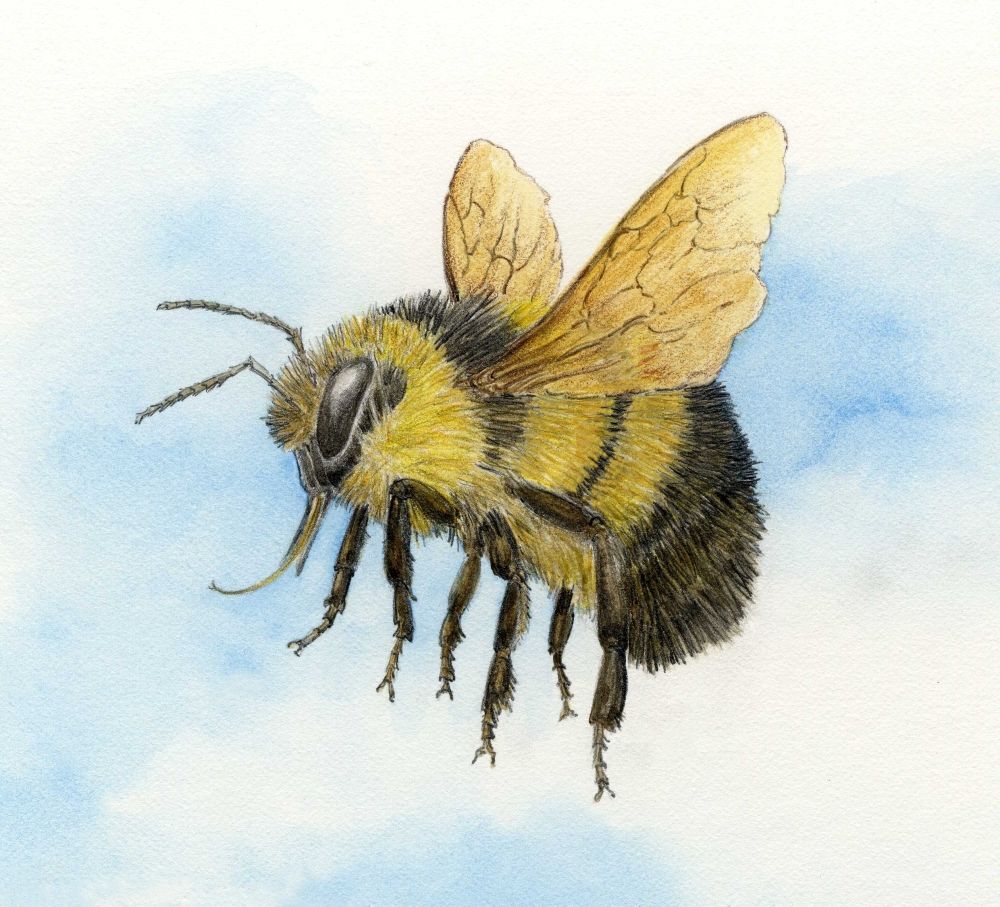
Rusty Patched Bumble Bee
Latin name: Bombus Affinis ,Conservsation status: critically endangered (population is decreasing)
Bees have existed on the planet for at least 40 million years. There are 250 species of bumblebees and seven species of honeybees. Fatter and furrier than honeybees, bumble bees make only a small amount of honey for their own food.
The Rusty Patched is the first bee to be listed as endangered in the US. Populations have declined as much as 87% from habitat loss, disease and pesticides. Climate threats include: warming and precipitation, early snow, late frost and drought. Bees and butterflies are important agricultural pollinators. In 2016, 40% of invertebrate pollinators (bees and butterflies) were listed as threatened with extinction.
Other animals at risk
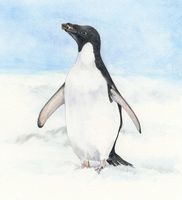
Adelie Penguin
In winter, the sun doesn't rise south of the Antarctic Circle. If Antarctic sea ice decreases and does not extend far enough to the north, Adélie Penguins, during their winter migration, may not be able to reach the sunlight needed to navigate, hunt and avoid predators—they won't dive in the dark. Other threats are oil pollution, fishing and disturbance of colonies from research stations and aircraft.
In winter, the sun doesn't rise south of the Antarctic Circle. If Antarctic sea ice decreases and does not extend far enough to the north, Adélie Penguins, during their winter migration, may not be able to reach the sunlight needed to navigate, hunt and avoid predators—they won't dive in the dark. Other threats are oil pollution, fishing and disturbance of colonies from research stations and aircraft.
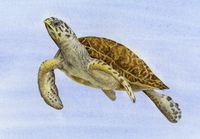
Hawksbill Sea Turtle
Climate change may affect Hawksbill Turtles in various ways because they live in different habitats at different stages of life: open ocean, beaches, lagoons and coral reefs. Rising sand temperature of nesting beaches produces more females and other abnormalities in baby turtles. Adults live primarily in coral reefs—threatened by rising ocean temperature and acidity. Since ancient times the Hawksbill has been exploited for its shell. They are also threatened from fisheries by-catch, development, and a high sensitivity to oil spills. The population has decreased by an estimated 80% in the last 100 years.
Climate change may affect Hawksbill Turtles in various ways because they live in different habitats at different stages of life: open ocean, beaches, lagoons and coral reefs. Rising sand temperature of nesting beaches produces more females and other abnormalities in baby turtles. Adults live primarily in coral reefs—threatened by rising ocean temperature and acidity. Since ancient times the Hawksbill has been exploited for its shell. They are also threatened from fisheries by-catch, development, and a high sensitivity to oil spills. The population has decreased by an estimated 80% in the last 100 years.
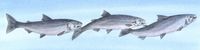
Sockeye Salmon
For decades wild salmon populations have been in decline from human causes: over fishing; habitat degradation—logging, mining, agriculture and dams; pollution; and interaction with hatchery or farmed salmon. These conditions and threats may hinder their ability to adapt to the effects of climate change. Salmon thrive at specific freshwater temperatures—warming air raises water temperature. Early snow melt and increased rains cause physical changes to spawning streams.
For decades wild salmon populations have been in decline from human causes: over fishing; habitat degradation—logging, mining, agriculture and dams; pollution; and interaction with hatchery or farmed salmon. These conditions and threats may hinder their ability to adapt to the effects of climate change. Salmon thrive at specific freshwater temperatures—warming air raises water temperature. Early snow melt and increased rains cause physical changes to spawning streams.
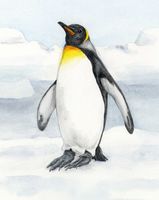
Emperor Penguin
In 50 years, the mean temperature of western Antarctica has risen nearly 3 °C—more than any other region—reducing the extent and thickness of winter ice. The Emperor Penguin is dependent on the ice for breeding, raising chicks and moulting. Less sea ice decreases zooplankton (krill) which feed on algae that grow on the underside of the ice. Krill are an important part of the food web for the Emperor and other Antarctic marine species.
In 50 years, the mean temperature of western Antarctica has risen nearly 3 °C—more than any other region—reducing the extent and thickness of winter ice. The Emperor Penguin is dependent on the ice for breeding, raising chicks and moulting. Less sea ice decreases zooplankton (krill) which feed on algae that grow on the underside of the ice. Krill are an important part of the food web for the Emperor and other Antarctic marine species.
The Rusty Patched Bumble Bee is at risk from climate change because of: