Leatherback Sea Turtle
Latin name: Dermochelys Coriacea,Conservsation status: vulnerable (population is decreasing)
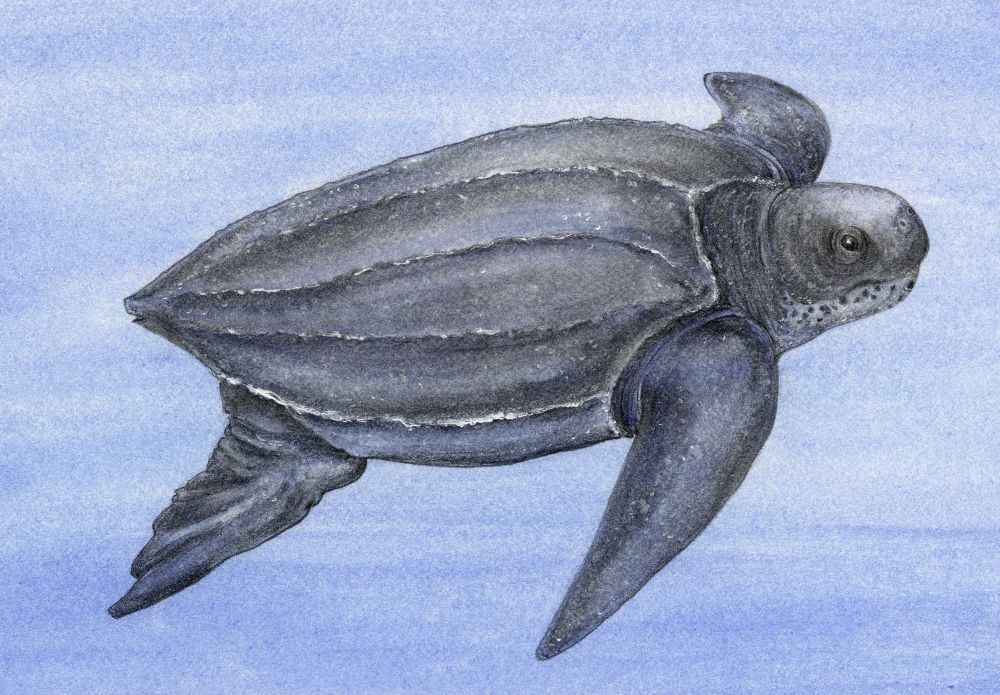
The largest of all sea turtles, the Leatherback has been on Earth since the dinosaurs—100 million years. It can grow over six feet long, weigh up to one ton, and dive over 3,000 feet—deeper than any other turtle.
Climate change impacts the Leatherback in two main ways: an increase in the temperature of nesting sands causes a greater proportion of females to hatch, destabilizing future populations; and sea level rise and stronger, more frequent storms erode nesting beaches and wash away eggs and hatchlings. The Leatherback is also threatened from fisheries by-catch, egg collection, coastal development, pollution and ingestion of floating plastics.
Other animals at risk
American Pika
Pikas live primarily in cool micro-climates on rocky slopes, feeding in adjacent meadows. Warmer temperatures and reduced snowpack are the main threats. Some Pikas may move to higher, cooler regions if there is enough vegetation. Pikas living in lower, warmer regions are at risk if they attempt to move to other regions as they are extremely sensitive to heat—more than two hours in temperatures over 78 °F can be lethal. Without enough winter snow for insulation, Pikas will freeze.
Pikas live primarily in cool micro-climates on rocky slopes, feeding in adjacent meadows. Warmer temperatures and reduced snowpack are the main threats. Some Pikas may move to higher, cooler regions if there is enough vegetation. Pikas living in lower, warmer regions are at risk if they attempt to move to other regions as they are extremely sensitive to heat—more than two hours in temperatures over 78 °F can be lethal. Without enough winter snow for insulation, Pikas will freeze.
Leatherback Sea Turtle
Climate change impacts the Leatherback in two main ways: an increase in the temperature of nesting sands causes a greater proportion of females to hatch, destabilizing future populations; and sea level rise and stronger, more frequent storms erode nesting beaches and wash away eggs and hatchlings. The Leatherback is also threatened from fisheries by-catch, egg collection, coastal development, pollution and ingestion of floating plastics.
Climate change impacts the Leatherback in two main ways: an increase in the temperature of nesting sands causes a greater proportion of females to hatch, destabilizing future populations; and sea level rise and stronger, more frequent storms erode nesting beaches and wash away eggs and hatchlings. The Leatherback is also threatened from fisheries by-catch, egg collection, coastal development, pollution and ingestion of floating plastics.
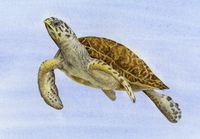
Hawksbill Sea Turtle
Climate change may affect Hawksbill Turtles in various ways because they live in different habitats at different stages of life: open ocean, beaches, lagoons and coral reefs. Rising sand temperature of nesting beaches produces more females and other abnormalities in baby turtles. Adults live primarily in coral reefs—threatened by rising ocean temperature and acidity. Since ancient times the Hawksbill has been exploited for its shell. They are also threatened from fisheries by-catch, development, and a high sensitivity to oil spills. The population has decreased by an estimated 80% in the last 100 years.
Climate change may affect Hawksbill Turtles in various ways because they live in different habitats at different stages of life: open ocean, beaches, lagoons and coral reefs. Rising sand temperature of nesting beaches produces more females and other abnormalities in baby turtles. Adults live primarily in coral reefs—threatened by rising ocean temperature and acidity. Since ancient times the Hawksbill has been exploited for its shell. They are also threatened from fisheries by-catch, development, and a high sensitivity to oil spills. The population has decreased by an estimated 80% in the last 100 years.
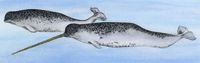
Narwhal
The Narwhal lives mainly in the Atlantic Arctic. Because of specialized habitat, narrow range and limited diet (Arctic cod and halibut), it is one of the Arctic species most vulnerable to climate change. The Narwhal breeds in bays and fjords, moving offshore during winter to areas of heavy ice pack, breathing through the few cracks. Sudden or extreme temperature change can cause these cracks to freeze shut, trapping the whales. Other threats are illegal hunting, industrial activities, and risks from oil development, exploration and shipping in the Arctic.
The Narwhal lives mainly in the Atlantic Arctic. Because of specialized habitat, narrow range and limited diet (Arctic cod and halibut), it is one of the Arctic species most vulnerable to climate change. The Narwhal breeds in bays and fjords, moving offshore during winter to areas of heavy ice pack, breathing through the few cracks. Sudden or extreme temperature change can cause these cracks to freeze shut, trapping the whales. Other threats are illegal hunting, industrial activities, and risks from oil development, exploration and shipping in the Arctic.
The Leatherback Sea Turtle is at risk from climate change because of:The Leatherback Sea Turtle is also threatened by: