
Sockeye Salmon
Latin name: Oncorhynchus Nerka,Conservsation status: least concern (population is stable)
Sockeye Salmon, once they leave the fresh water where they are born, may travel as far away as 2600 miles before returning to the same waters to spawn, one to four years later.
For decades wild salmon populations have been in decline from human causes: over fishing; habitat degradation—logging, mining, agriculture and dams; pollution; and interaction with hatchery or farmed salmon. These conditions and threats may hinder their ability to adapt to the effects of climate change. Salmon thrive at specific freshwater temperatures—warming air raises water temperature. Early snow melt and increased rains cause physical changes to spawning streams.
Other animals at risk
Black-footed Albatross
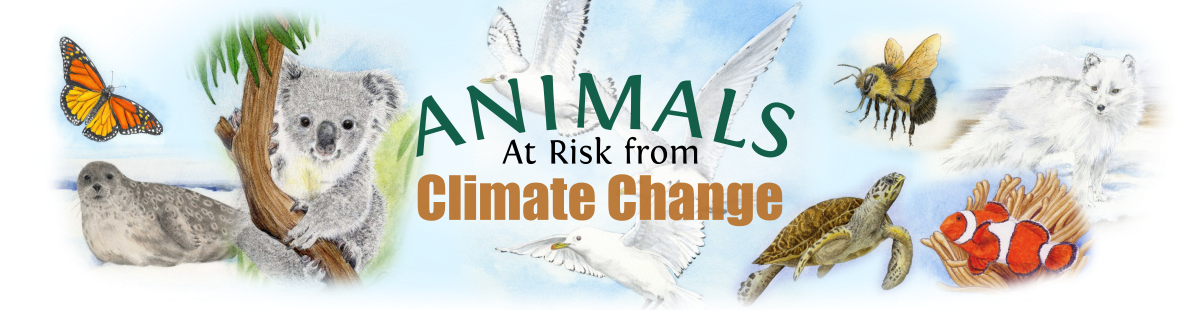
Almost all Black Footed Albatrosses live in the Hawaiian Islands. Like all species of albatrosses that breed on low lying beaches and slopes, they are highly susceptible to sudden flooding from sea level rise and storm surges. Thousands each year are caught by longline fishing and they are also threatened by pollution and ingesting plastics that float in the ocean.
Almost all Black Footed Albatrosses live in the Hawaiian Islands. Like all species of albatrosses that breed on low lying beaches and slopes, they are highly susceptible to sudden flooding from sea level rise and storm surges. Thousands each year are caught by longline fishing and they are also threatened by pollution and ingesting plastics that float in the ocean.
Beluga
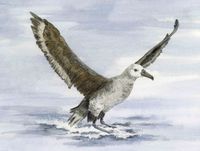
Belugas live in Arctic and Sub-Arctic waters. Impacts from climate change include: an increase in ship traffic as sea ice declines, oil exploration and extraction, fisheries by-catch, and disruption of the food web. As Arctic waters warm and currents change, the Humpback (a competitor) and the Orca (a predator) may move north and stay longer. Some Beluga populations are also threatened by hunting, pollution and habitat loss.
Belugas live in Arctic and Sub-Arctic waters. Impacts from climate change include: an increase in ship traffic as sea ice declines, oil exploration and extraction, fisheries by-catch, and disruption of the food web. As Arctic waters warm and currents change, the Humpback (a competitor) and the Orca (a predator) may move north and stay longer. Some Beluga populations are also threatened by hunting, pollution and habitat loss.
Western Glacier Stonefly
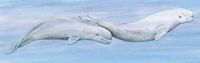
Since 1960, the average summer temperature in Glacier National Park has increased by around 1 °C and glaciers have declined by 35%. By counting Stoneflies, scientists can determine how quickly glaciers are melting and the temperature of streams. In a two year search begun in 2011, scientists found the Stonefly in only one of the six streams it had previously occupied and discovered that it had retreated to two different streams at higher altitudes. Satellite data confirm that the world’s glaciers are declining, affecting the availability of fresh water for humans, animals and plants, and contributing to sea level rise.
Since 1960, the average summer temperature in Glacier National Park has increased by around 1 °C and glaciers have declined by 35%. By counting Stoneflies, scientists can determine how quickly glaciers are melting and the temperature of streams. In a two year search begun in 2011, scientists found the Stonefly in only one of the six streams it had previously occupied and discovered that it had retreated to two different streams at higher altitudes. Satellite data confirm that the world’s glaciers are declining, affecting the availability of fresh water for humans, animals and plants, and contributing to sea level rise.
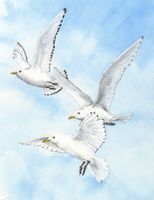
Ivory Gull
Ivory Gulls are almost entirely dependent on sea ice and glaciers for nesting and food foraging. They feed on fish and shellfish that thrive near the edge of the ice, and on the remains of seals left by Polar Bears. Seal blubber is a source of heavy contaminants—Ivory Gull eggs show a higher concentration of mercury and pesticides than any Arctic sea bird. Other threats are illegal hunting and disturbance from diamond mining in the Canadian Arctic.
Ivory Gulls are almost entirely dependent on sea ice and glaciers for nesting and food foraging. They feed on fish and shellfish that thrive near the edge of the ice, and on the remains of seals left by Polar Bears. Seal blubber is a source of heavy contaminants—Ivory Gull eggs show a higher concentration of mercury and pesticides than any Arctic sea bird. Other threats are illegal hunting and disturbance from diamond mining in the Canadian Arctic.
The Sockeye Salmon is at risk from climate change because of:The Sockeye Salmon is also threatened by: