
Staghorn Coral
Latin name: Acropora Cervicornis,Conservsation status: critically endangered (population is stable)
Coral reefs are the most diverse ecosystems in the marine world and can take 10,000 years to form. They cover less than 1% of the ocean floor but are habitat for at least 25% of all known marine life. A coral is made up of thousands of tiny animals called polyps, protected by a hard skeleton. There are 160 different species of Staghorn Coral.
In the last 30 years the Staghorn Coral population has decreased by 80% from disease, pollution, development and damage. Climate change is increasing the risk of extinction. Corals live in symbiotic (mutually beneficial) relation with algae. The coral receives nutrients and oxygen from algae, and the algae receive nutrients and carbon dioxide from the coral. Rising sea temperature increases algae growth so oxygen levels become too high for the coral, causing "bleaching"—the coral expels the algae and dies. Higher ocean acidity contributes to bleaching and also reduces the ability of corals and other marine animals to build hard shells. Other threats from climate change are sea level rise, changes in currents and storm damage.
Other animals at risk
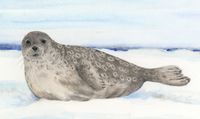
All populations of Ringed Seals are expected to be adversely affected by climate change because of dependence on sea ice and snow dens for breeding, protecting pups, moulting and resting. Early warming causes pups to separate prematurely from their mothers. As sea ice declines, other threats are fisheries by-catch, increased shipping, tourism and development. Seals are vulnerable to disease from heavy concentrations of pollutants that have accumulated in the Arctic food web.
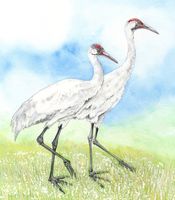
Before 1800 there were an estimated 10–20,000 Whooping Cranes in North America. By 1941, because of hunting and habitat destruction, there were fewer than 20. There are now approximately 350–380 in the wild. The wild Whooping Crane population has only one winter habitat—a wildlife refuge on the Gulf Coast in Texas; and one spring breeding habitat—a prairie wetlands in Alberta. Severe storms, sea level rise, drought, industrial development and oil spills threaten these habitats. Another significant threat to young Whooping Cranes is colliding with power lines in their migration corridor.
Belugas live in Arctic and Sub-Arctic waters. Impacts from climate change include: an increase in ship traffic as sea ice declines, oil exploration and extraction, fisheries by-catch, and disruption of the food web. As Arctic waters warm and currents change, the Humpback (a competitor) and the Orca (a predator) may move north and stay longer. Some Beluga populations are also threatened by hunting, pollution and habitat loss.
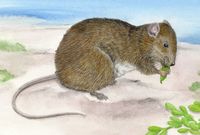
The Bramble Cay Melomys was the first species to be declared extinct because of climate change. Sea level rise and storm surges washed away its habitat, food and the last of the population. In 2014 scientists went searching in the hopes of starting a breeding program but were unable to find a pair. Other sea birds and turtles that live on the Cay are also threatened by storm surges and sea level rise.
The Staghorn Coral is at risk from climate change because of:The Staghorn Coral is also threatened by: