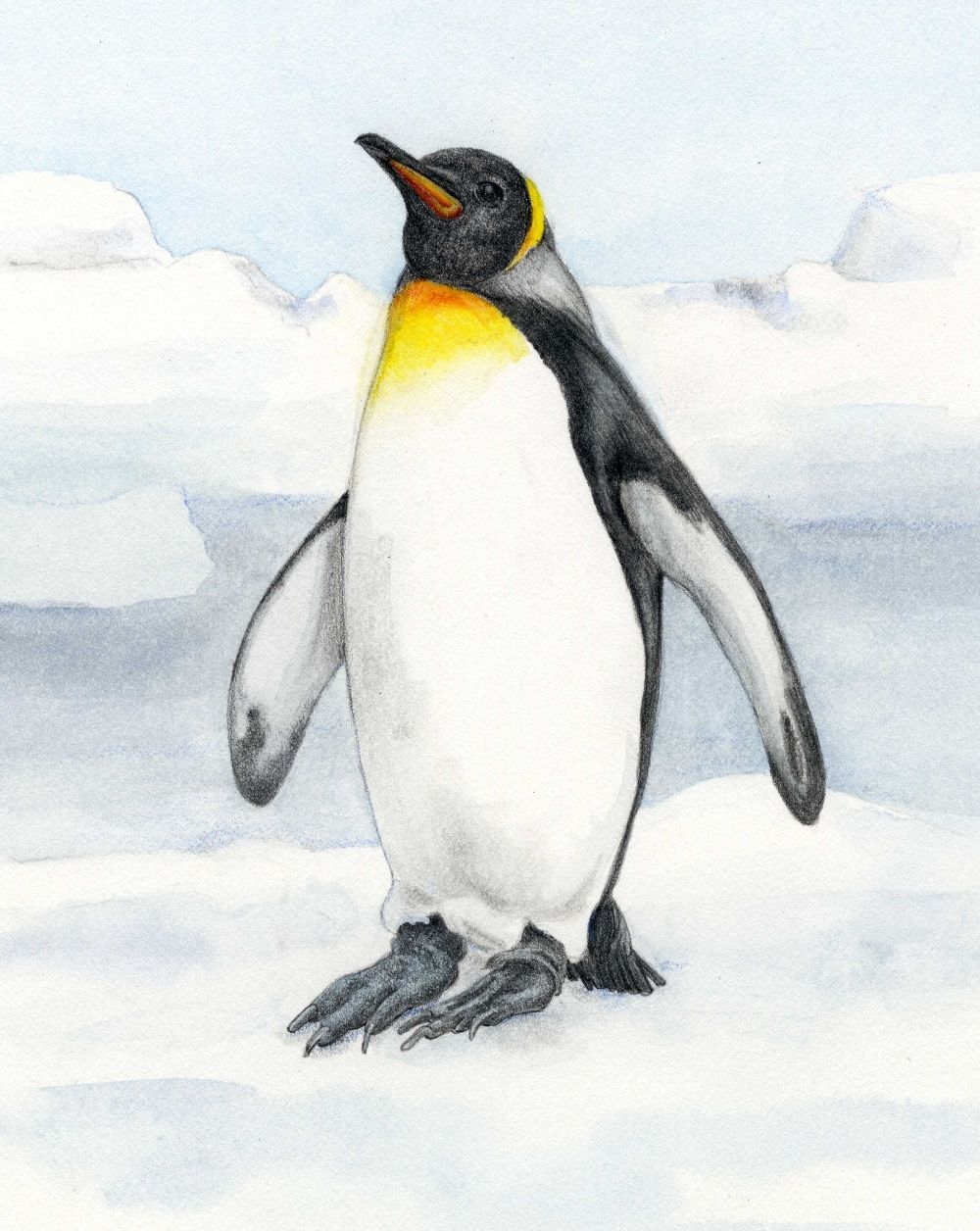
Emperor Penguin
Latin name: Aptenodytes Forsteri,Conservsation status: near threatened (population is stable)
The Emperor is the largest of all penguins, standing as tall as four feet. Males withstand the Antarctic weather for up to two months without eating—keeping the eggs warm in a feathered pouch on their feet. Females travel up to 50 miles a day to bring food to the newly-hatched chicks.
In 50 years, the mean temperature of western Antarctica has risen nearly 3 °C—more than any other region—reducing the extent and thickness of winter ice. The Emperor Penguin is dependent on the ice for breeding, raising chicks and moulting. Less sea ice decreases zooplankton (krill) which feed on algae that grow on the underside of the ice. Krill are an important part of the food web for the Emperor and other Antarctic marine species.
Other animals at risk
Bramble Cay Melomys
The Bramble Cay Melomys was the first species to be declared extinct because of climate change. Sea level rise and storm surges washed away its habitat, food and the last of the population. In 2014 scientists went searching in the hopes of starting a breeding program but were unable to find a pair. Other sea birds and turtles that live on the Cay are also threatened by storm surges and sea level rise.
The Bramble Cay Melomys was the first species to be declared extinct because of climate change. Sea level rise and storm surges washed away its habitat, food and the last of the population. In 2014 scientists went searching in the hopes of starting a breeding program but were unable to find a pair. Other sea birds and turtles that live on the Cay are also threatened by storm surges and sea level rise.
Rusty Patched Bumble Bee
The Rusty Patched is the first bee to be listed as endangered in the US. Populations have declined as much as 87% from habitat loss, disease and pesticides. Climate threats include: warming and precipitation, early snow, late frost and drought. Bees and butterflies are important agricultural pollinators. In 2016, 40% of invertebrate pollinators (bees and butterflies) were listed as threatened with extinction.
The Rusty Patched is the first bee to be listed as endangered in the US. Populations have declined as much as 87% from habitat loss, disease and pesticides. Climate threats include: warming and precipitation, early snow, late frost and drought. Bees and butterflies are important agricultural pollinators. In 2016, 40% of invertebrate pollinators (bees and butterflies) were listed as threatened with extinction.
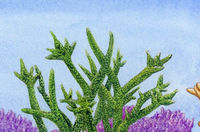
Staghorn Coral
In the last 30 years the Staghorn Coral population has decreased by 80% from disease, pollution, development and damage. Climate change is increasing the risk of extinction. Corals live in symbiotic (mutually beneficial) relation with algae. The coral receives nutrients and oxygen from algae, and the algae receive nutrients and carbon dioxide from the coral. Rising sea temperature increases algae growth so oxygen levels become too high for the coral, causing "bleaching"—the coral expels the algae and dies. Higher ocean acidity contributes to bleaching and also reduces the ability of corals and other marine animals to build hard shells. Other threats from climate change are sea level rise, changes in currents and storm damage.
In the last 30 years the Staghorn Coral population has decreased by 80% from disease, pollution, development and damage. Climate change is increasing the risk of extinction. Corals live in symbiotic (mutually beneficial) relation with algae. The coral receives nutrients and oxygen from algae, and the algae receive nutrients and carbon dioxide from the coral. Rising sea temperature increases algae growth so oxygen levels become too high for the coral, causing "bleaching"—the coral expels the algae and dies. Higher ocean acidity contributes to bleaching and also reduces the ability of corals and other marine animals to build hard shells. Other threats from climate change are sea level rise, changes in currents and storm damage.

Common Clownfish
Clownfish live in the shallow waters of coral reefs where they have a mutually beneficial relation with a few species of sea anemone. The anenome protects the Clownfish, and the fish's swimming aerates the water around the anenome. Clownfish are unable to move long distances, and rising ocean temperature and acidity is a threat to their coral reef habitats. Increased acidity also seems to impair their ability to navigate to their home anemones.
Clownfish live in the shallow waters of coral reefs where they have a mutually beneficial relation with a few species of sea anemone. The anenome protects the Clownfish, and the fish's swimming aerates the water around the anenome. Clownfish are unable to move long distances, and rising ocean temperature and acidity is a threat to their coral reef habitats. Increased acidity also seems to impair their ability to navigate to their home anemones.
The Emperor Penguin is at risk from climate change because of:The Emperor Penguin is also threatened by: