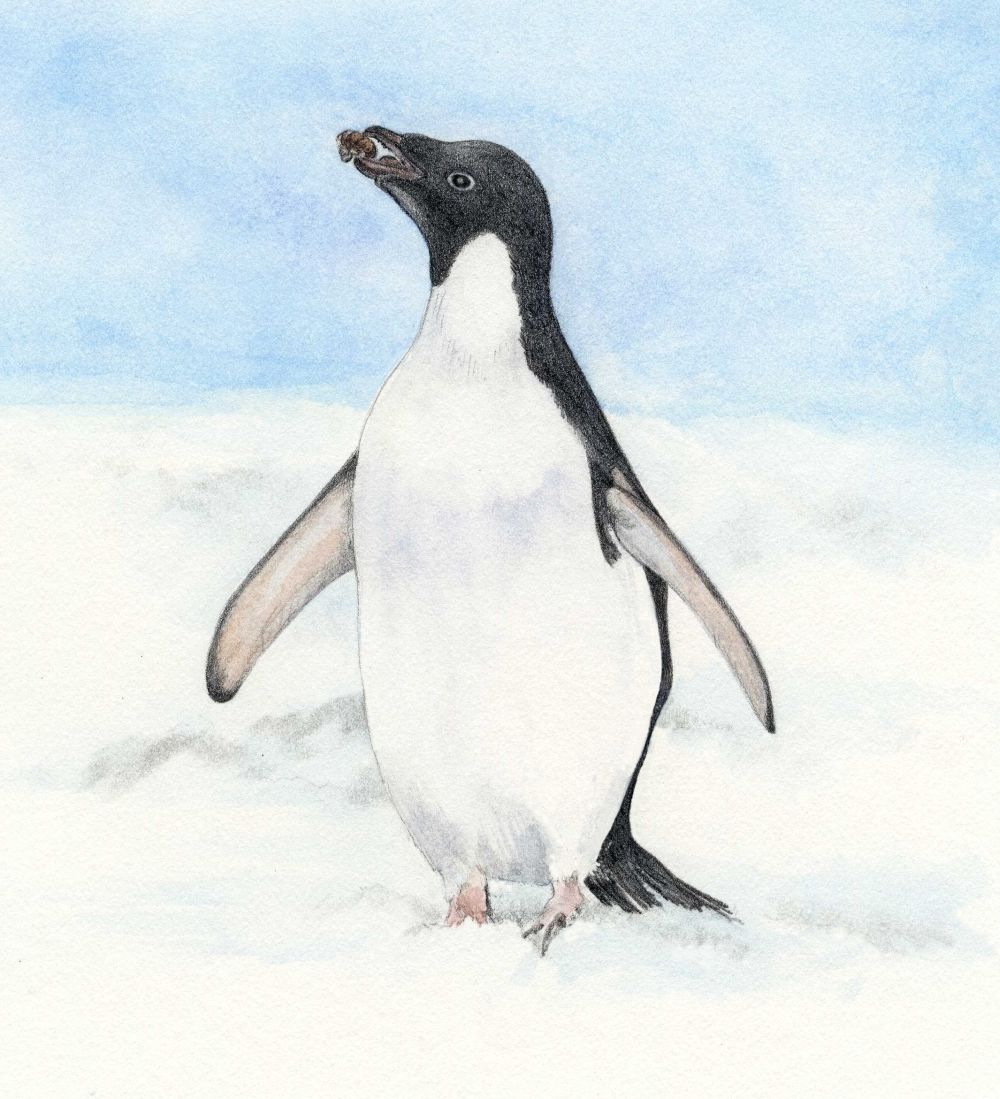
Adelie Penguin
Latin name: Pygoscelis Adeliae ,Conservsation status: near threatened (population is increasing)
Even though they can't fly, to avoid predators Adélie Penguins are able to leap almost ten feet out of the water and land safely onto rocks. They follow the sun from their breeding colonies to winter feeding grounds, travelling an average of 8,000 miles a year.
In winter, the sun doesn't rise south of the Antarctic Circle. If Antarctic sea ice decreases and does not extend far enough to the north, Adélie Penguins, during their winter migration, may not be able to reach the sunlight needed to navigate, hunt and avoid predators—they won't dive in the dark. Other threats are oil pollution, fishing and disturbance of colonies from research stations and aircraft.
Other animals at risk
Ringed Seal
All populations of Ringed Seals are expected to be adversely affected by climate change because of dependence on sea ice and snow dens for breeding, protecting pups, moulting and resting. Early warming causes pups to separate prematurely from their mothers. As sea ice declines, other threats are fisheries by-catch, increased shipping, tourism and development. Seals are vulnerable to disease from heavy concentrations of pollutants that have accumulated in the Arctic food web.
All populations of Ringed Seals are expected to be adversely affected by climate change because of dependence on sea ice and snow dens for breeding, protecting pups, moulting and resting. Early warming causes pups to separate prematurely from their mothers. As sea ice declines, other threats are fisheries by-catch, increased shipping, tourism and development. Seals are vulnerable to disease from heavy concentrations of pollutants that have accumulated in the Arctic food web.
Tufted Puffin
Tufted Puffins are threatened by sea level rise and storm surges which destroy habitats and breeding areas. In some areas of North America warming seas are causing the fish that the Puffins feed on to migrate farther north, making it difficult for them to find adequate food. Other threats are entrapment in fishing nets, oil spills, pollution, ingestion of plastic, human disturbance of breeding colonies and introduced predators such as rats and foxes.
Tufted Puffins are threatened by sea level rise and storm surges which destroy habitats and breeding areas. In some areas of North America warming seas are causing the fish that the Puffins feed on to migrate farther north, making it difficult for them to find adequate food. Other threats are entrapment in fishing nets, oil spills, pollution, ingestion of plastic, human disturbance of breeding colonies and introduced predators such as rats and foxes.
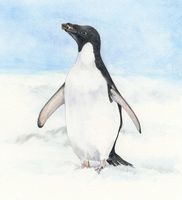
Adelie Penguin
In winter, the sun doesn't rise south of the Antarctic Circle. If Antarctic sea ice decreases and does not extend far enough to the north, Adélie Penguins, during their winter migration, may not be able to reach the sunlight needed to navigate, hunt and avoid predators—they won't dive in the dark. Other threats are oil pollution, fishing and disturbance of colonies from research stations and aircraft.
In winter, the sun doesn't rise south of the Antarctic Circle. If Antarctic sea ice decreases and does not extend far enough to the north, Adélie Penguins, during their winter migration, may not be able to reach the sunlight needed to navigate, hunt and avoid predators—they won't dive in the dark. Other threats are oil pollution, fishing and disturbance of colonies from research stations and aircraft.

Common Clownfish
Clownfish live in the shallow waters of coral reefs where they have a mutually beneficial relation with a few species of sea anemone. The anenome protects the Clownfish, and the fish's swimming aerates the water around the anenome. Clownfish are unable to move long distances, and rising ocean temperature and acidity is a threat to their coral reef habitats. Increased acidity also seems to impair their ability to navigate to their home anemones.
Clownfish live in the shallow waters of coral reefs where they have a mutually beneficial relation with a few species of sea anemone. The anenome protects the Clownfish, and the fish's swimming aerates the water around the anenome. Clownfish are unable to move long distances, and rising ocean temperature and acidity is a threat to their coral reef habitats. Increased acidity also seems to impair their ability to navigate to their home anemones.
The Adelie Penguin is at risk from climate change because of:The Adelie Penguin is also threatened by: